Blogs & Events
Technical deep-dives, event recaps, and cloud training insights.
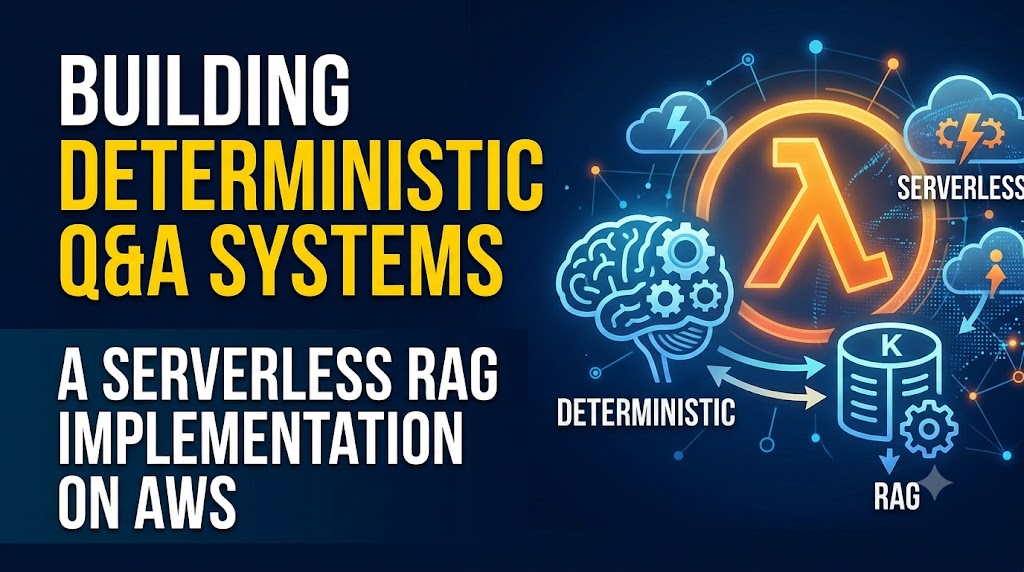
Building Deterministic Q&A Systems: A Serverless RAG Implementation on AWS
Plugging an LLM into your internal docs and hoping for the best is a gamble, not a strategy. Fine-tuning models every time a README updates is expensive, slow, and resource-heavy.
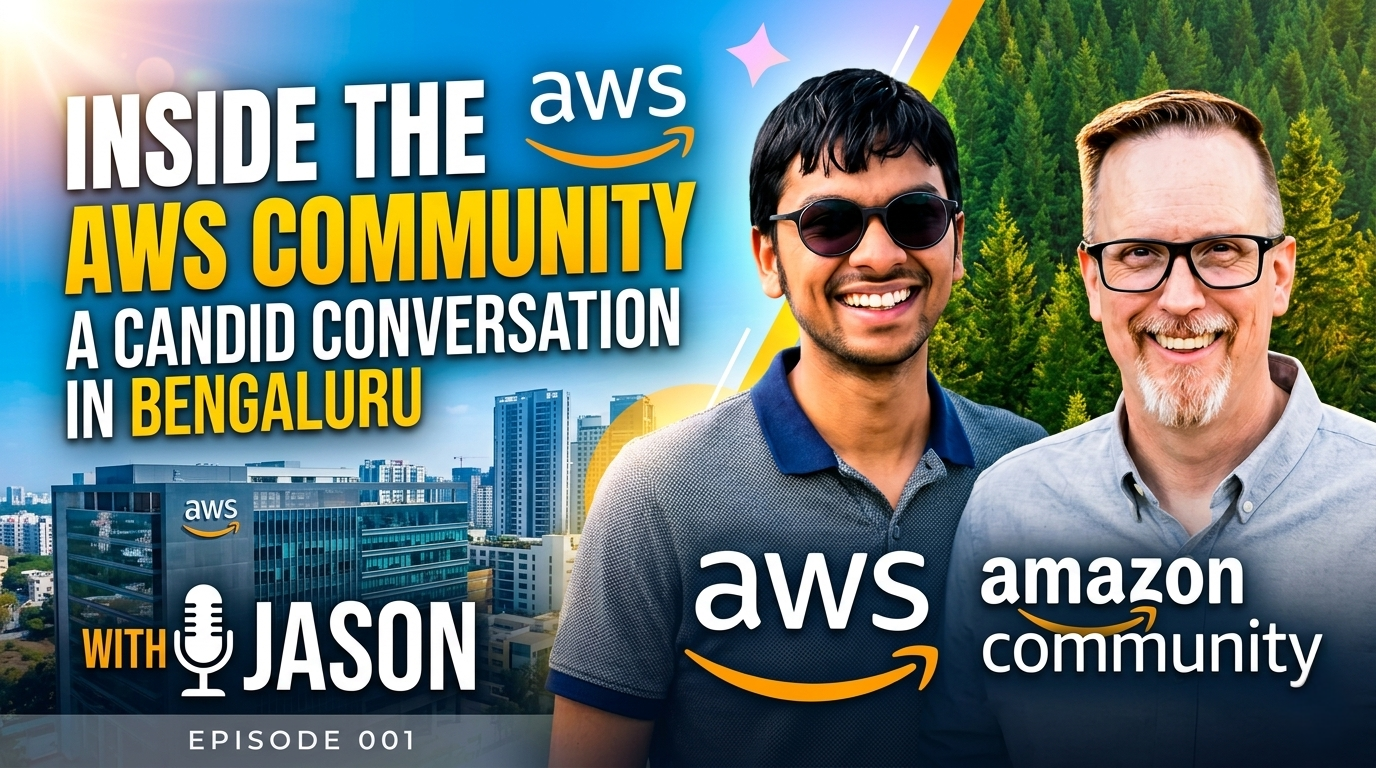
Inside the AWS Community with Jason: A Candid Conversation in Bengaluru
At AWS Community Day Bengaluru, Jason, Head of the AWS Community Builders program, shared his journey from self-employed tech blogger, YouTuber, and Microsoft MVP to leading AWS’s global community initiatives. Joining AWS in 2020, he helped launch the Community Builders program during the pandemic. Jason highlighted the remarkable scale and enthusiasm of India’s AWS community, noting that nearly half of all Community Builder applications came from India. He also discussed strategies for growing communities worldwide, the student-focused Cloud Clubs initiative, and the importance of local user groups in fostering future AWS leaders and community growth.
The Future of Software Engineering in the Age of AI
A candid, unscripted conversation between Rajat Arya — Tech Lead at Hugging Face and former co-founder of XetHub — and Chandradeo Arya, Solutions Architect & Instructor. What follows is the kind of career advice most people only get behind closed doors.
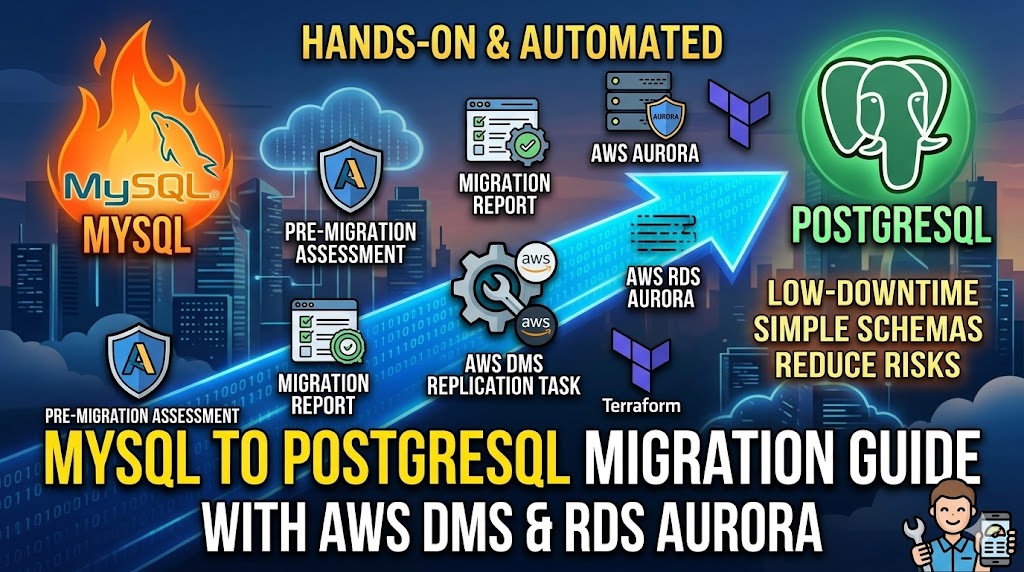
MySQL to PostgreSQL: A Hands-On AWS DMS Migration Guide with AWS RDS Aurora
Database migration is often challenging due to schema differences, data type incompatibilities, downtime risks, manual effort, and data integrity concerns. While traditional methods such as SQL dumps, ETL tools, and utilities like pgloader can be used, they often increase the risk of errors and service disruption. This article demonstrates how AWS Database Migration Service (AWS DMS) simplifies migrations by enabling automated, low-downtime data transfer between databases such as MySQL and PostgreSQL. Using Terraform, it walks through provisioning DMS resources, configuring endpoints, creating replication tasks, setting IAM roles, performing pre-migration assessments, reviewing migration reports, and executing a successful migration.
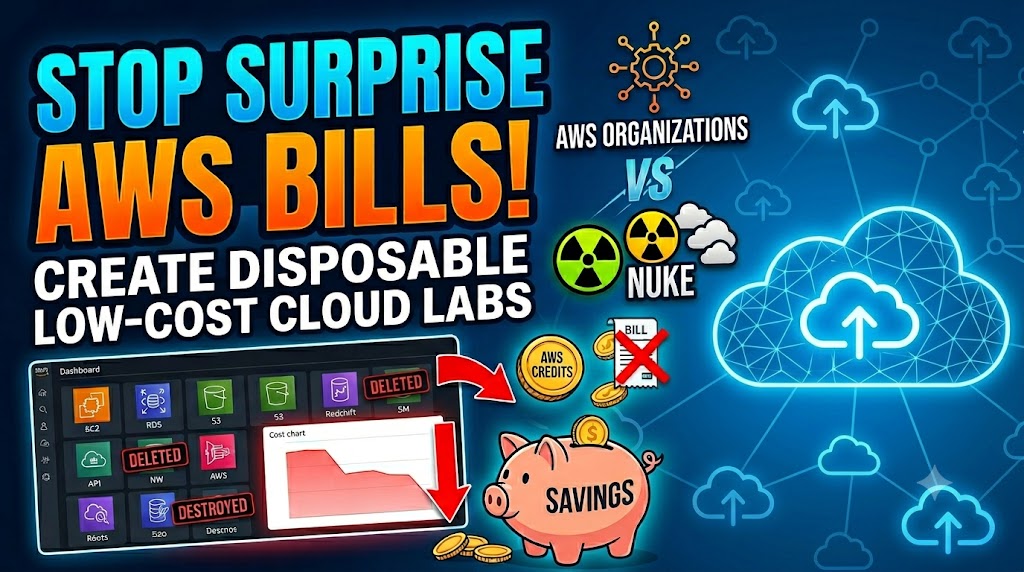
Using AWS Organizations and AWS Nuke to create disposable low-cost cloud experience
Unexpected AWS charges are a common challenge for beginners, especially when resources are created across multiple regions and forgotten. This hands-on guide introduces AWS Nuke, a powerful open-source tool that helps identify and delete AWS resources safely and efficiently. You'll learn how to install AWS CLI and AWS Nuke, create configurations, target or exclude resources, apply filters, perform dry runs, and execute resource cleanup with confidence. Whether you're managing disposable test accounts, cleaning up complex environments, or preventing surprise bills, AWS Nuke can become an essential part of your AWS cost-management toolkit.
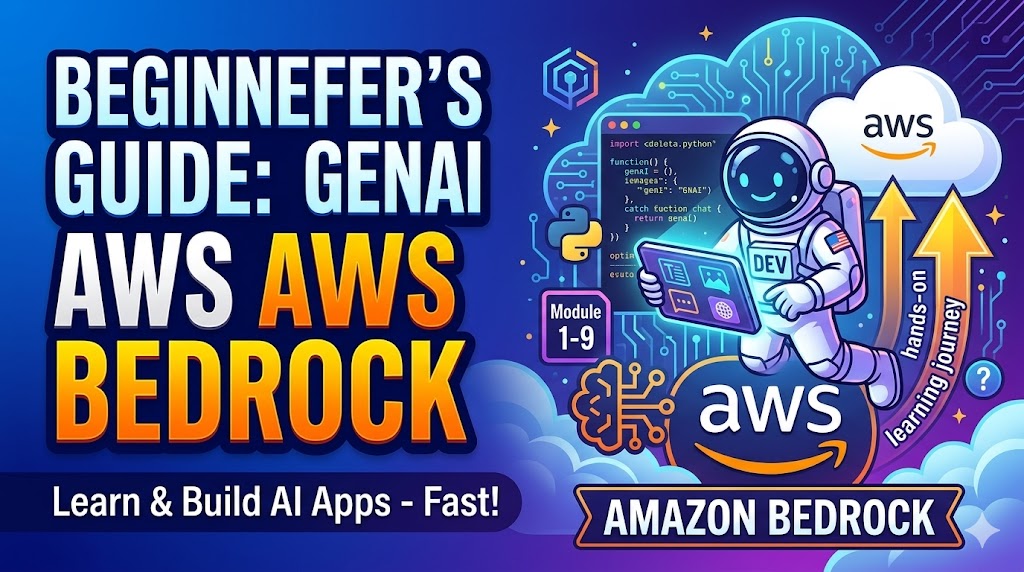
Beginners guide to learn and build Generative AI applications on AWS Bedrock
Generative AI (GenAI) is transforming how we create content, automate tasks, and solve problems across industries. This guide introduces Amazon Bedrock, AWS’s managed service for building GenAI applications using foundation models from multiple providers. Bedrock lowers the barrier to entry through a pay-as-you-go model, simplifies development with deep AWS integrations, and enables developers to focus on innovation rather than infrastructure. The learning path covers GenAI fundamentals, AWS basics, prompt engineering, Bedrock playgrounds, application development, knowledge bases, AI agents, and Python-based GenAI applications, culminating in best practices, security, ethics, and troubleshooting.
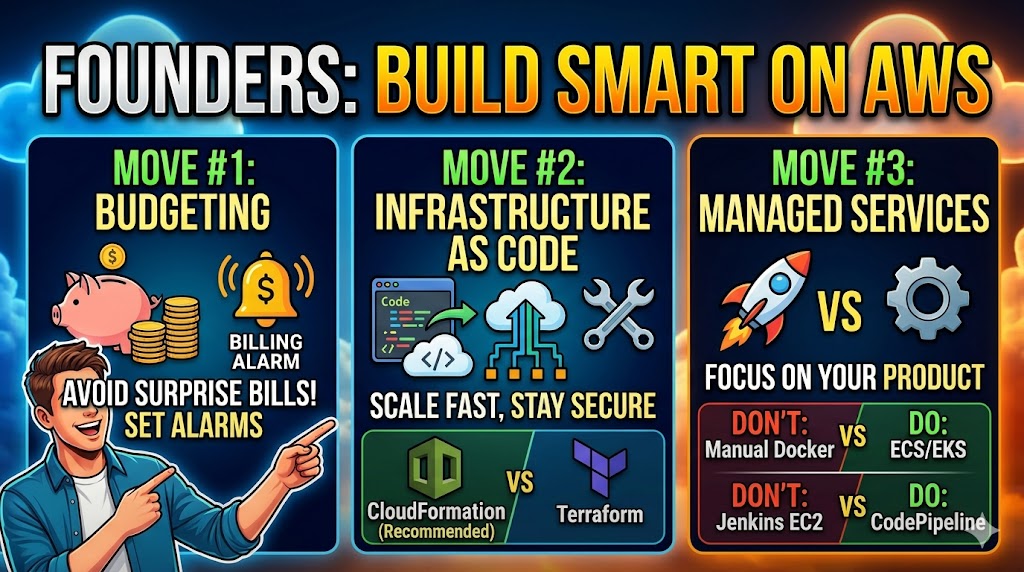
Founders first moves to start building on AWS: situation and solution
Building on AWS as a startup requires making a few foundational decisions early. This guide covers three essential moves: controlling cloud costs with AWS Budgets and billing alarms, adopting Infrastructure as Code (IaC) for scalable and repeatable deployments, and choosing AWS managed services over self-managed alternatives. By implementing proactive cost controls, standardizing infrastructure with CloudFormation or Terraform, and leveraging services such as Amazon Cognito, RDS, ECS, and CodePipeline, founders can reduce operational overhead, improve security, accelerate development, and focus engineering efforts on building their core product rather than managing cloud infrastructure.
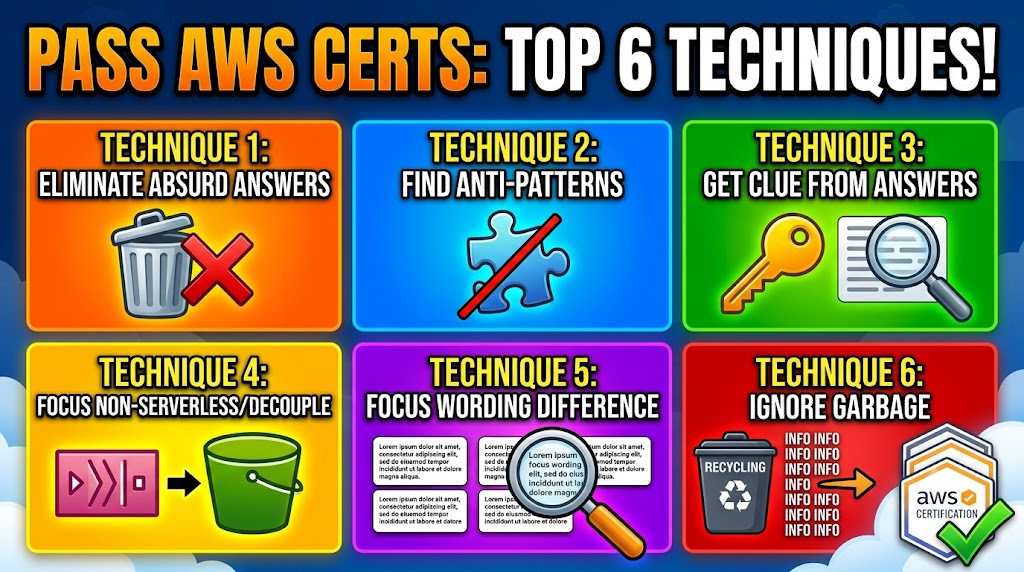
Top 6 AWS certification exam passing technique
Passing AWS certification exams requires more than memorizing services—it requires understanding how AWS questions are designed. This guide shares six practical exam techniques that help candidates identify keywords, eliminate incorrect answers, recognize architectural anti-patterns, solve open-ended scenarios, focus on scalable and decoupled solutions, and distinguish between deceptively similar answer choices. Through real-world AWS certification examples covering Auto Scaling, DynamoDB, serverless architectures, security, and compliance, you'll learn how to think like an AWS examiner and improve your ability to select the best answer under time pressure, especially in associate and professional-level certification exams.
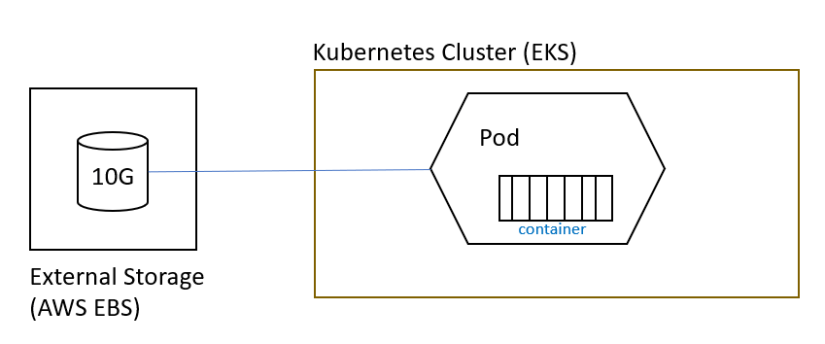
Dynamic Volume Provisionining in AWS EKS using EBS
Persistent storage is essential for Kubernetes workloads that need to retain data beyond the lifecycle of individual pods. This tutorial explains the concepts of Persistent Volumes (PV), Persistent Volume Claims (PVC), and dynamic volume provisioning in Amazon EKS using Amazon EBS. You'll learn how Kubernetes abstracts storage management, create a custom StorageClass, dynamically provision EBS-backed volumes, bind PVCs to PVs, and mount persistent storage into pods. Through a hands-on walkthrough, the guide demonstrates how AWS EKS automates storage provisioning, enabling applications to use durable and scalable storage without manual volume management.
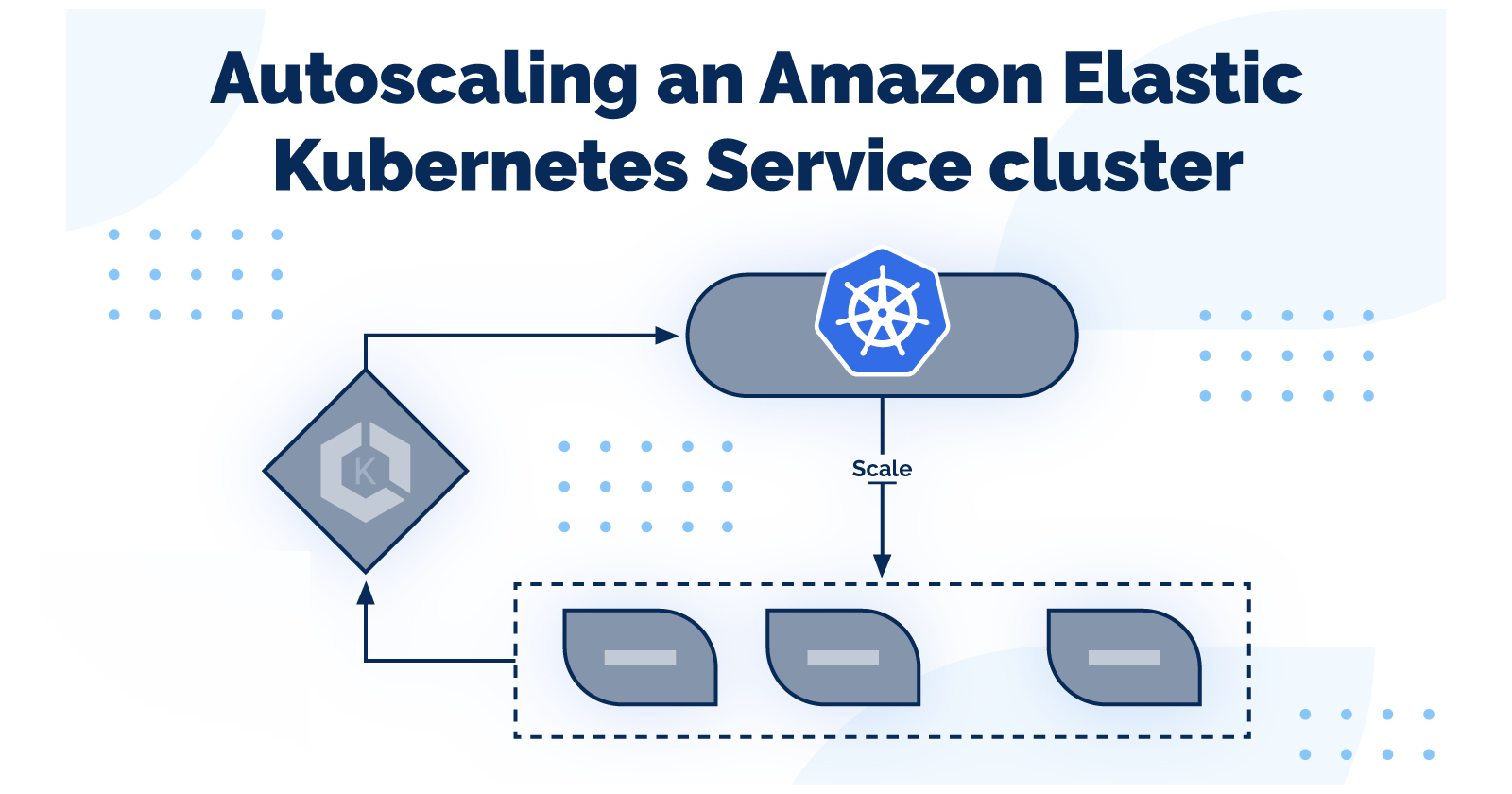
Enable Cluster Autoscaler in EKS with easy steps
Seven steps process to enable cluster autoscaler in EKS
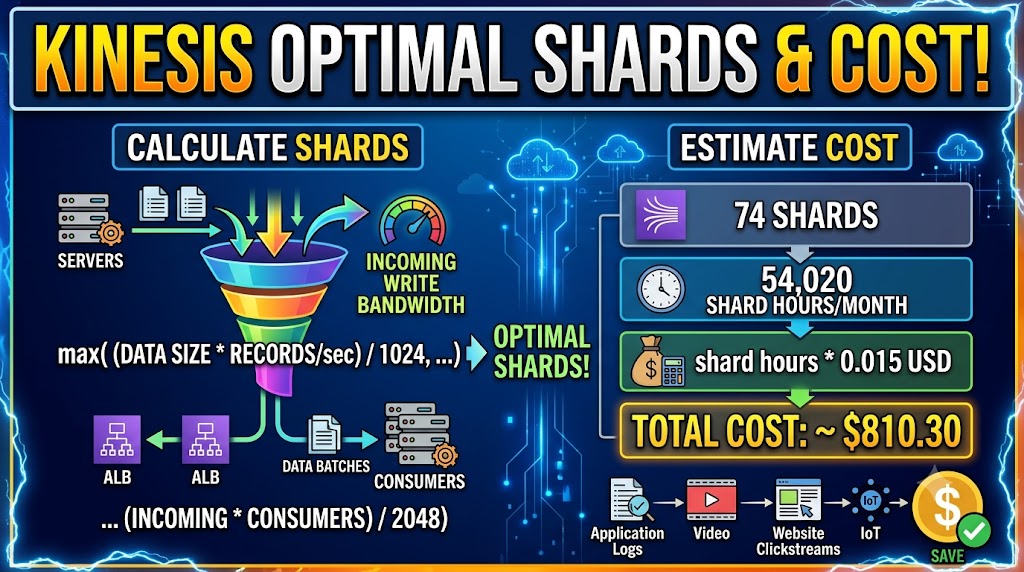
AWS Kinesis optimal shards and cost estimation
AWS Kinesis optimal shards and cost estimation with hands on demo using producer and consumer long running tasks
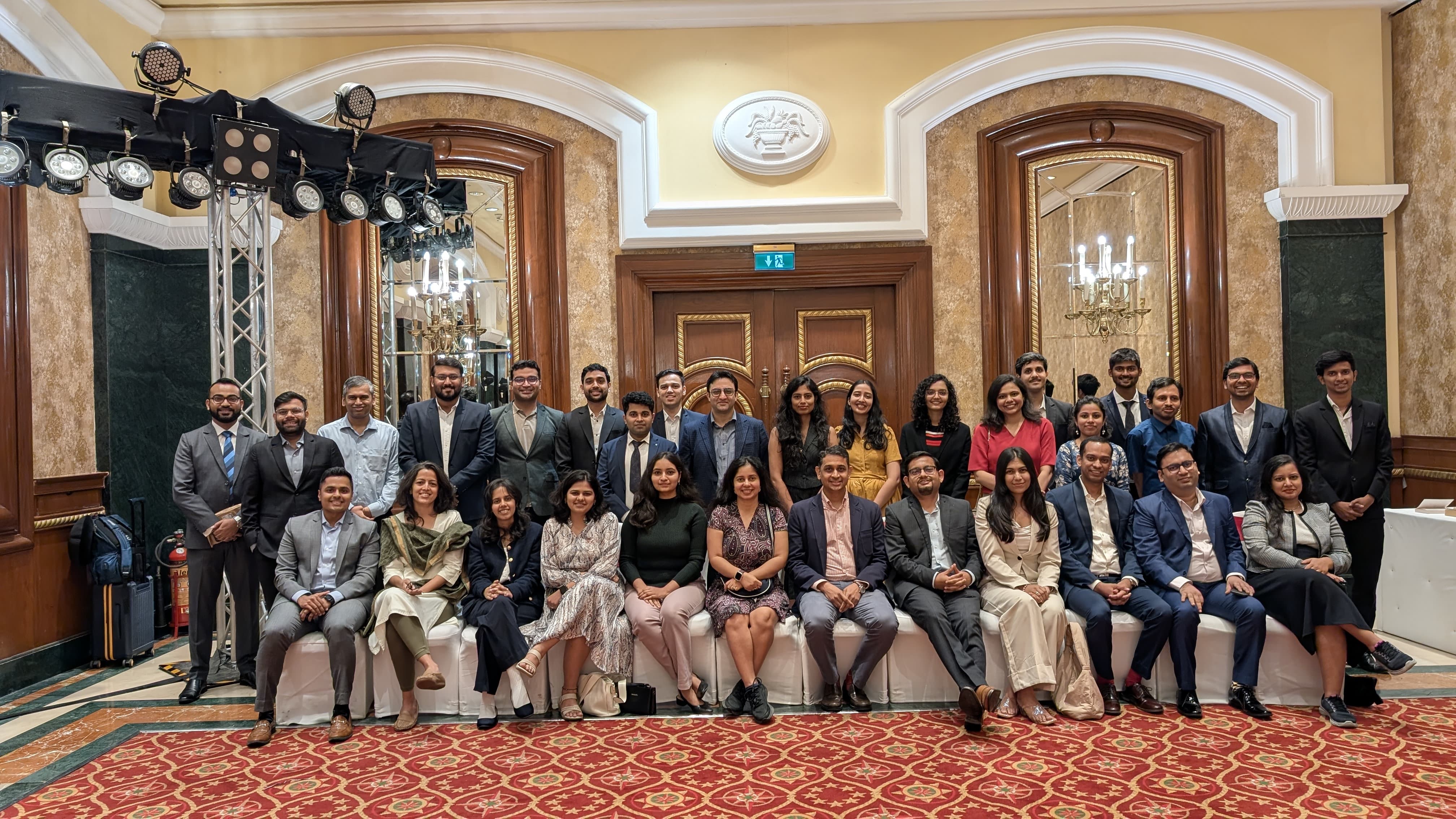
Exploration & Discovery: Career paths when the future is uncertain by Arijit Sarkar
At the Aditya Birla Scholars Reunion 2025, Arijit Sarkar shared insights from a career shaped by exploration rather than a linear path. Drawing on experiences across investing, consulting, entrepreneurship, and healthcare, he emphasized that academic credentials are only a starting point; real growth comes from understanding people, businesses, and uncertainty. Sarkar highlighted the value of networks as a safety net for taking risks, reflected on his transition from technical finance to human-centered leadership, and encouraged young professionals to embrace ambiguity. His key message: success is not about following a traditional trajectory, but about continuous learning, adaptability, and courage to explore.
The Four Dimensions of Great Leadership: Beyond Academic Excellence by Shilpa Rangaswamy
In her insightful talk at the Aditya Birla Scholars Reunion, Shilpa Rangaswamy, leadership advisory expert at Egon Zehnder, argues that academic excellence and raw ambition are merely baseline "hygiene factors" at senior executive levels. True leadership is defined not by flawless technical execution, but by how effectively you inspire and treat those around you.
The Power of Career Compounding: Lessons from 25 Years in Finance by Saurabh Jhalaria
In his insightful talk at the Aditya Birla Scholars Reunion, Saurabh Jhalaria—Chief Investment Officer at InCred Group and former Managing Director at Deutsche Bank—shared invaluable reflections from his distinguished 25-year journey in finance. Jhalaria bridges the gap between financial principles and professional growth, illustrating how professionals can transition from linear career paths to exponential growth by leveraging the mechanics of "career compounding."